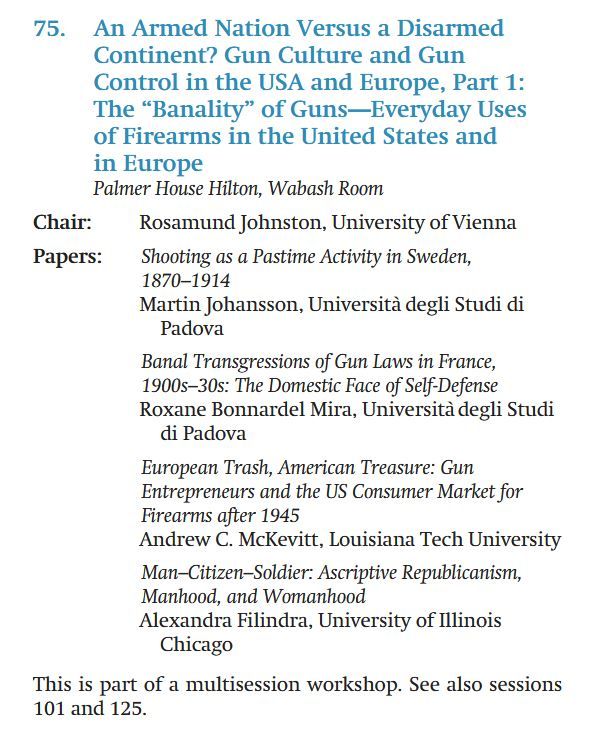
30 June 2025| Roxane Bonnardel Mira – Reconnaître les «apaches» des «honnêtes gens». Les usages policiers de l’infraction du port d’arme prohibée à Paris (1895-1940)
Reconnaître les «apaches» des «honnêtes gens». Les usages policiers de l’infraction du port d’arme prohibée à Paris (1895-1940)
Journées du Mouvement Social – MHS Paris Nord, Paris
This paper compares police logics underlying arrests for “carrying prohibited weapons” in five Parisian police stations between 1895 and 1940. Although illegal, carrying a revolver was widely considered to be a legitimate security practice until the 1920s. Analysis of policing practices suggests that the police exercised a degree of leniency toward individuals carrying firearms when they matched the expected profile of the vigilant citizen. At the same time, municipal officers knew how to use the offence of carrying a prohibited weapon to police public spaces by targeting those they considered most marginalised – particularly working-class young men, who were easily conflated with criminals. The marginalisation of the poorest was not the only pattern to emerge from the analysis of a sample of one thousand arrests for carrying prohibited weapons. One group, in particular, was marked by police disinterest: spouses threatened with firearms. As long as tge gun control policy was structured around the dichotomy of “criminals versus honest people,” police officers were willing to tolerate the arming of individuals for personal protection. By allowing individuals who had used their firearm gainst their spouses to walk free of the police station, the police upheld a vision of the family that left little room for separation and divorce. The ways in which police officers searched for illegal gun-carrying cases shed light on how police objectives in terms of gun control evolved before and after the First World War.
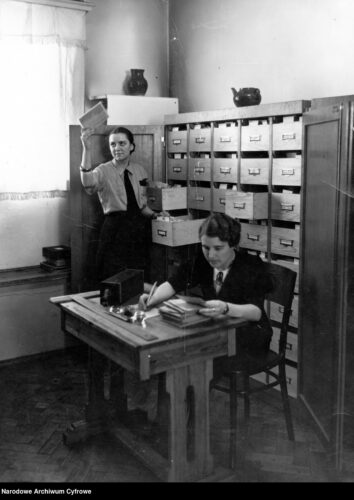
[Photo source: Employées des archives photographiques du ministère des Affaires confessionnelles et de l’Instruction publique, Varsovie, 1937. Narodowe Archiwum Cyfrowe: 3/1/0/2/2711a/2 (domaine public)]